
Motherhood
The invisible load is real
The invisible load of motherhood is real. Katie shares the research and the personal reasons behind togetHER, the new village for mums.
We call it the ‘mental load’ or the ‘invisible load’ — and honestly? The name kind of annoys me. It feels like it flattens something enormous into something manageable-sounding. But at least we’ve named it. I’m trying to be more positive about small wins. My new pain specialist would be proud.
What I’ve realised — despite my biology fighting me on it — is that I need to stay in my lane and do what I set out to do.
Nothing I’m about to share will feel new to you. It probably won’t surprise you. You’ve likely seen versions of this data before. I see it everyday thanks to my social media algorithms. But if I’m going to stay true to why I started togetHER — to genuinely understand the mothers I want to help — then I need to practise what I preach. I need to show you I see you. Not as a customer. As a community.
So here it is — in my words, with the facts I’ve gathered as best I can. It’s a long one today. But some things deserve the space.
So what exactly is the invisible load?
The invisible load is a combination of three overlapping types of labour that mothers overwhelmingly carry — and that rarely get named, let alone counted.
1. Mental / Cognitive Labour
The invisible planning work. Knowing where everything is. Managing the family calendar. Anticipating what will go wrong before it does.
• Meal planning for the week
• Tracking what food needs to be bought
• Managing the family calendar (school events, appointments, activities)
• Tracking children’s schedules including pupil-free days, school run pick-ups, doctors’ appointments, playdates, special events, excursions, class parties, science fairs, who needs what and when
• Researching child development, sleep, and nutrition
• Knowing where everything in the house is, always
• Rotating clothes, shoes, and toys as children outgrow them
• Purchasing gifts for other kids’ birthday parties
• Acting as family timekeeper
• Anticipating what will go wrong before it does
2. Physical / Daily Labour
• Cooking and preparing meals (including ones that don’t get eaten)
• Packing school and work lunches (also may not get eaten)
• Cleaning — daily wiping, tidying, deep cleaning (lots of incidental squats aka - exercise)
• Laundry — washing, drying, folding, putting away
• Grocery shopping
• School drop-off and pick-up
• Bathing children and bedtime routines
• Getting kids dressed and ready each morning
3. Direct Childcare
• Making and attending doctor’s, dental, and specialist appointments
• Managing sick days (and being the one who stays home)
• Supervising homework
• Organising extracurricular activities and getting kids there
• Reading, play time, and developmental activities
4. Emotional Labour
• Managing tantrums, meltdowns, and big feelings (staying up late to research how to manage these)
• Comforting sad, frustrated, overwhelmed, or hungry kids
• Managing children’s social lives and friendships
• Noticing when something is ‘off’ with a child before anyone else does
• Anticipating everything that can go wrong — because she’ll be the one dealing with the consequences
ANTICIPATING !! The nightmare emotion of a person with ADHD and a history of trauma and feeling unsafe. Sorry that was selfish to add, but I bet there’s millions of you that feel the same.
The numbers that should make everyone uncomfortable
A 2024 University of Bath and University of Melbourne study analysed data from 3,000 US parents across seven categories of domestic cognitive labour: cleaning, scheduling, childcare, maintenance and repairs, finances, social relationships, and cooking. Here’s what they found:
• Mothers handle 71% of all household mental load tasks — 60% more than fathers
• Mothers manage 79% of repetitive daily responsibilities like childcare and cleaning (vs fathers’ 37%)
• 61% of working mums handle most household chores themselves
• 54% manage their kids’ schedules and activities
• 55% are the ones who take charge when a child is sick
• 62% of mothers take less than one hour for themselves every single day
And in Australia specifically:
Women in heterosexual relationships spend between 5 and 14 hours a week on unpaid domestic housework. Men spend an average of 5 hours.
Wow - I’m exhausted already. I haven’t even gotten out of bed yet. Seriously I’m writing this whilst my son still sleeps next to me. It does light a fire in you yeah? It’s been niggling and nudging me for a while and now I want to scream from the rooftops - any will do. I suppose that won’t help though. “Focus Katie!!”
This isn’t a ‘mum problem’. It’s a systems problem.
The data also shows that fathers frequently overestimate their contributions — they believe the mental load is more equally shared than mothers report. This isn’t necessarily malicious. I actually have a husband that contributes, and really well. I also know a lot of fathers that do also - not the same, it will never be the same, but I don’t want this to be taken as anything negative towards men personally. However, it is a perception gap built on a system that never required men to notice this work in the first place.
The mental load didn’t emerge because mothers are natural organisers or because fathers are naturally checked out. It emerged because the unpaid work of running a family was never designed to be shared — it was designed to be absorbed, invisibly, by one person.
Now, hopefully you will understand why I want to help and one day influence change. I know I am not alone. I hope you can take away today it’s not unknown and that we deserve better. At the very least I hope you give yourself some grace and compassion, because what you do is bloody amazing, and you are fucking incredible, and beautiful, and wonderful and the list goes on but I think you might be a bit over words by now. I know I know, I am trying to build a business to help change this, and that seems a bit shallow and again selfish. togetHER is how I want to bring that work to life: a village for mums to meet, connect and restore, in ways that fit their own lives. I’m close to 41 and have only just started to figure my shit out - the ADHD, self esteem, and trying to take care of myself so I’m not unwell all the time. However I need help too. I am building what I need too.
Love you x
— Katie
Sources: University of Bath / University of Melbourne (2024), Journal of Marriage and Family; WORK180 Australian household data; Psyched Mommy invisible load research summary
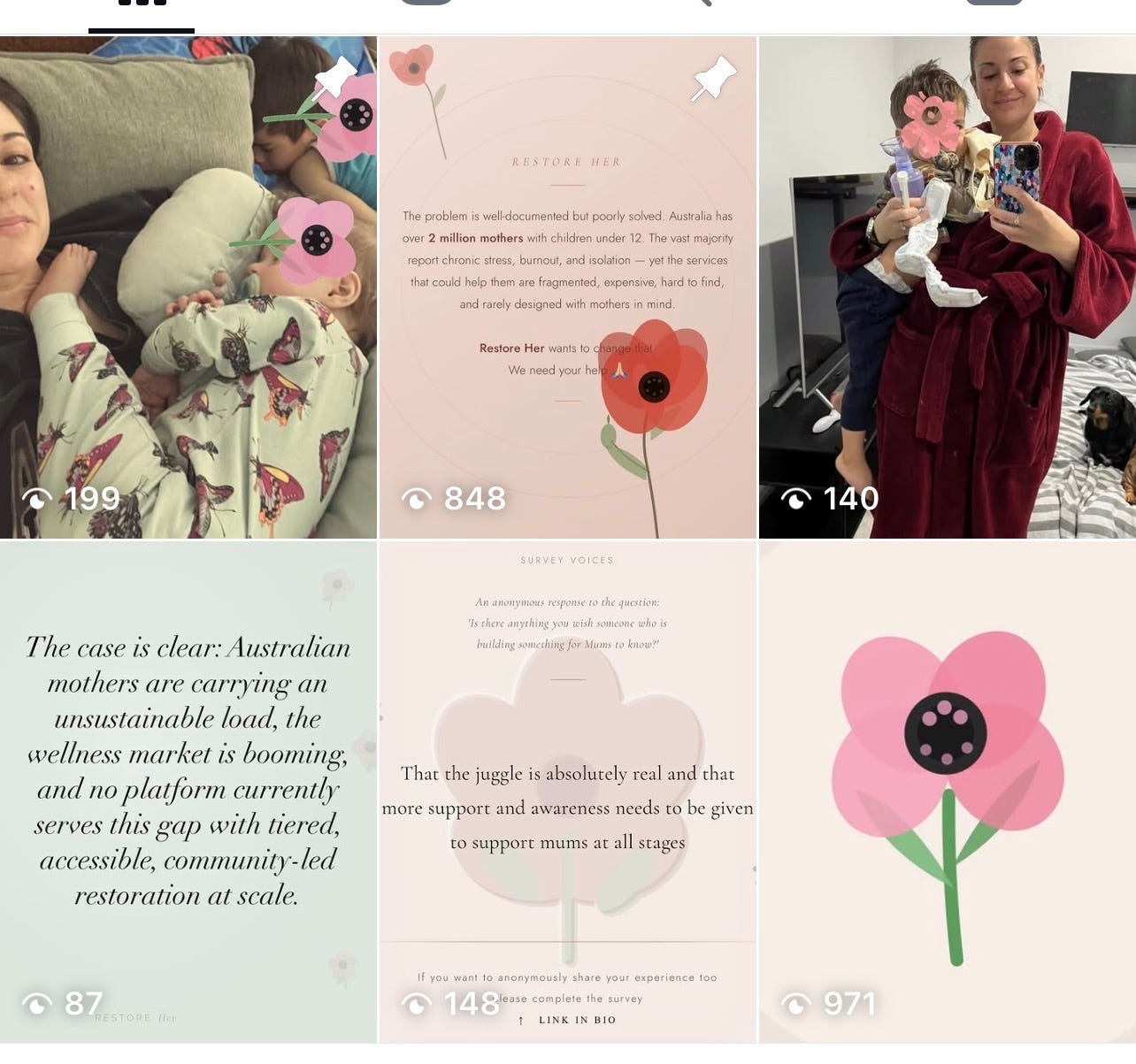
Images are all personal and cannot be used or shared other than for the purposes of ‘togetHER’ ABN 14 294 953 321
For more information follow the links in my bio
Email : spark.cr3ations@gmail.com
Originally published on Substack.